Washington Hotels
 Hotel Gracery

Open the Door to Good Fortune in Fukui: 3 Shrines Around Mt. Asuwa
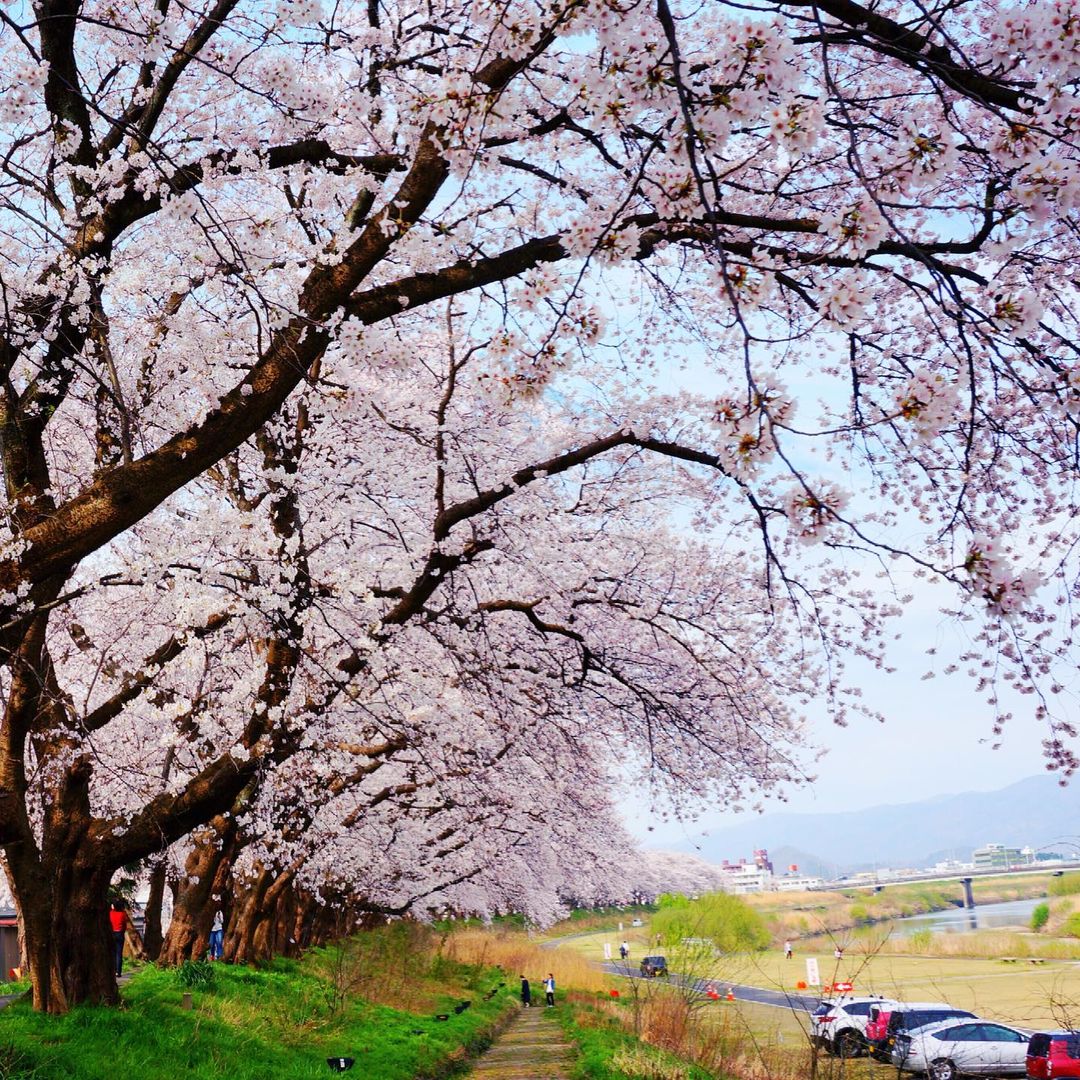
Located close to central Fukui City, Mt. Asuwa is a place where abundant nature and history come together. Cherry blossoms brighten the mountain in spring, hydrangeas bloom in early summer, and colorful foliage appears in autumn, making it a delightful place to explore throughout the seasons. The surrounding area is also home to several historic shrines that have long welcomed the prayers of local people.
Among them are a shrine dedicated to a dragon deity associated with water, a shrine connected to an emperor who contributed to the development of Echizen, and a shrine honoring a warrior who lived through a turbulent period in Japanese history. Each has its own distinctive origins and attracts worshippers seeking protection from misfortune, prosperity in business, fertility and safe childbirth, success in examinations, and victory in personal endeavors. The grounds also feature historic remains, sacred trees, and stones where visitors can entrust their wishes.
All three shrines are deeply connected to the history and natural environment of Fukui, offering visitors an opportunity to discover the stories that have shaped the region. Why not stop by when you would like to find a moment of calm during your journey or gather the strength to take a new step forward? Here, we introduce three spiritual destinations worth visiting in Fukui.
Receive the Power of the Dragon Deity at Keya Kurotatsu Shrine, One of Fukui’s Foremost Spiritual Destinations
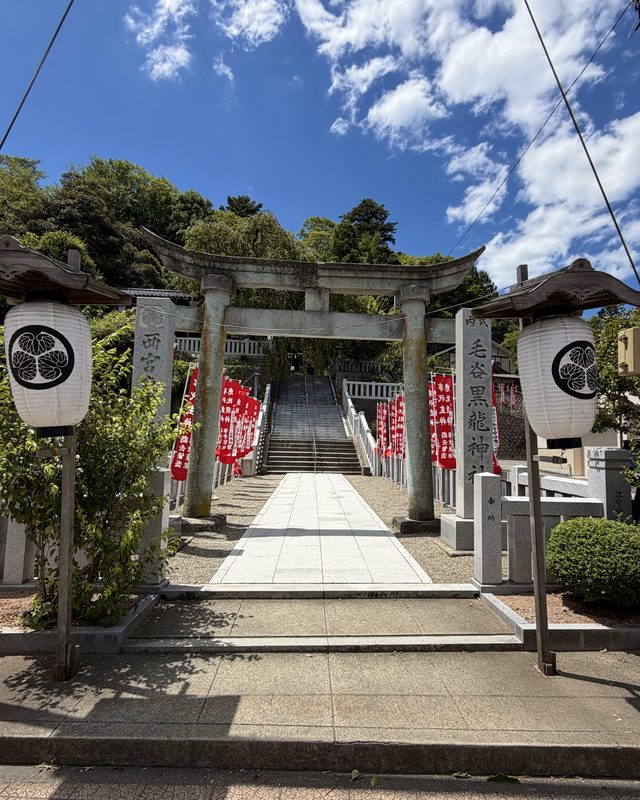
Located at the eastern foot of Mt. Asuwa, Keya Kurotatsu Shrine is affectionately known among local people as “Kurotatsu-san.” Its principal deity, Kurotatsu Okami, presides over water, an essential part of human life. The shrine was founded in honor of the guardian deity of the Kuzuryu River and has long been regarded as one of Japan’s four great ancient deities. The deity is believed to offer protection from misfortune, renewed vitality, fertility and safe childbirth, and prosperity in business.
The grounds contain several places worth visiting alongside the main shrine. At the Wish-Gr granting Stone, visitors strike the stone three times while making a wish. The Lucky Stroking Stone is carved with a small dragon believed to bring good fortune, health, and an abundant harvest. At the Yakuwari Stone, visitors breathe onto an unglazed earthenware cup before throwing it against the stone, symbolically transferring their misfortune to the cup and breaking it away. This is a shrine to visit when you are ready to take a new step forward or let go of something weighing on your mind.
| Hours | Weekdays: 9:00 a.m.–4:00 p.m. Saturdays, Sundays, and national holidays: 9:00 a.m.–5:00 p.m. |
| Address | 3-8-1 Keya, Fukui City, Fukui Prefecture |
| Access | HOTEL FUJITA FUKUI: A 20-min walk to Keya Kurotatsu Shrine. |
| URL | https://www.kurotatu-jinja.jp/ |
Asuwa Shrine: A Historic Sanctuary Watching Over the Journey of Echizen
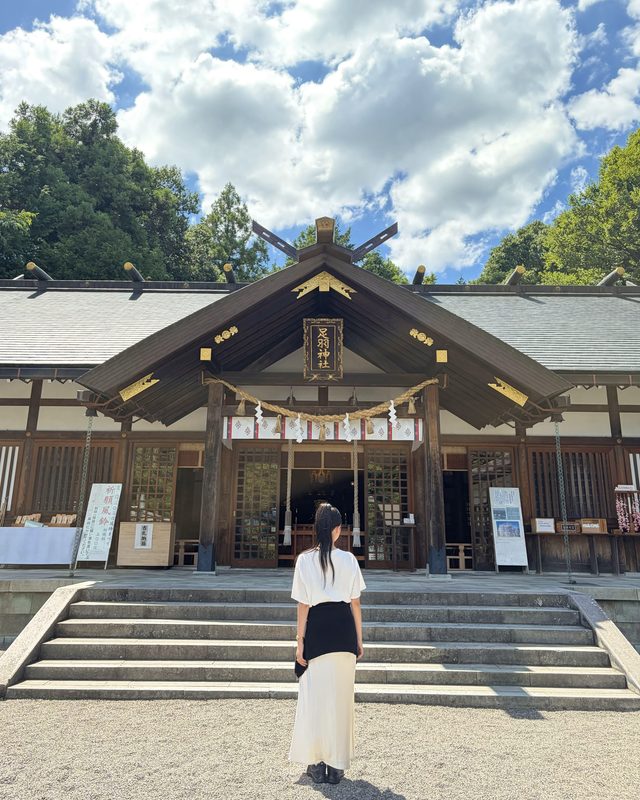
Located halfway up Mt. Asuwa, Asuwa Shrine is said to have a history spanning more than 1,500 years. Its principal deity is Emperor Keitai, the 26th emperor of Japan. Before ascending the throne, Emperor Keitai lived in Echizen, where he is said to have improved the region’s rivers and promoted industries such as agriculture, sericulture, and papermaking. In recognition of these achievements, he has long been revered as the ancestral deity who laid the foundations of Echizen.
In addition to Emperor Keitai, the shrine enshrines the five Ikasuri deities, who protect the land and the home. They are believed to grant prosperity in business, safety during construction, protection from misfortune, fertility, and safe childbirth. Standing at the center of the grounds is a weeping cherry tree approximately 380 years old and designated a Natural Monument of Fukui City. In spring, pale blossoms cover its wide-spreading branches and welcome visitors. The Takao maple trees along the approach, which turn vivid colors in autumn, have also been designated Natural Monuments of Fukui City. Surrounded by the changing beauty of the seasons, visitors can enjoy a peaceful moment of prayer.
| Hours | Weekdays: 9:00 a.m.–4:00 p.m. Saturdays, Sundays, and national holidays: 9:00 a.m.–5:00 p.m. |
| Address | 1-8-25 Asuwa, Fukui City, Fukui Prefecture |
| Access | HOTEL FUJITA FUKUI: A 25- to 30-min walk to Asuwa Shrine. |
| URL | https://asuwajinja.jp/ |
Find the Courage to Take on a New Challenge at Fujishima Shrine
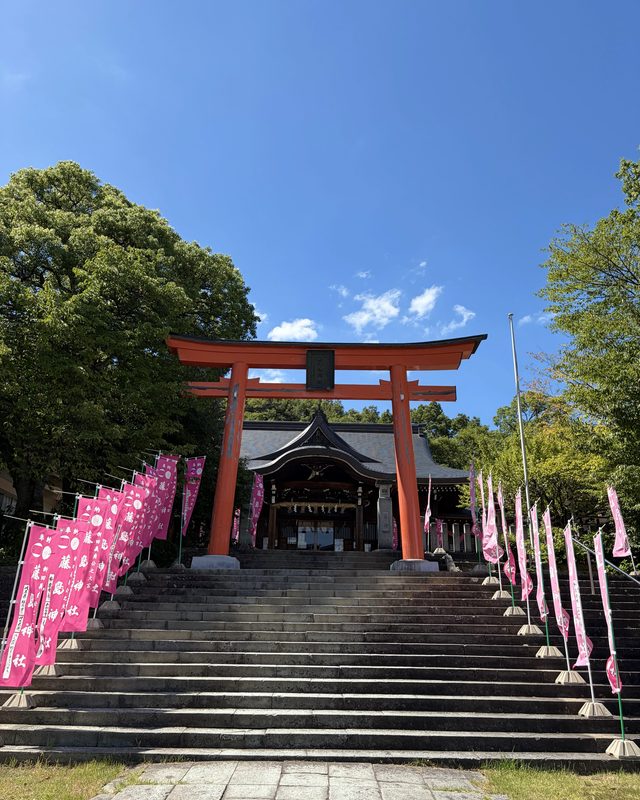
Located on Mt. Asuwa, Fujishima Shrine enshrines Nitta Yoshisada, a warrior active from the closing years of the Kamakura period through the Nanboku-cho period, as its principal deity. Nitta Yoshisada supported Emperor Go-Daigo and played a major role in bringing down the Kamakura shogunate. Inspired by his life, worshippers visit the shrine to pray for success in examinations, job searches, professional qualifications, sports, and other personal challenges.
The shrine preserves more than 60 treasures, including historical documents and swords. Among them, a helmet said to have been worn by Nitta Yoshisada and a letter written by the warrior Yuki Munehiro are designated Important Cultural Properties of Japan. From the shrine grounds, situated on elevated land on Mt. Asuwa, visitors can also look out over the Fukui cityscape and see the Hokuriku Shinkansen. It is a place to reflect on history, compose yourself, and renew your determination for the challenges ahead.
| Hours | 10:00 a.m.–4:00 p.m. |
| Address | 3-8-21 Keya, Fukui City, Fukui Prefecture |
| Access | HOTEL FUJITA FUKUI: A 20-min walk to Fujishima Shrine. |
| URL | https://nitta.or.jp/ |
Base of this trip
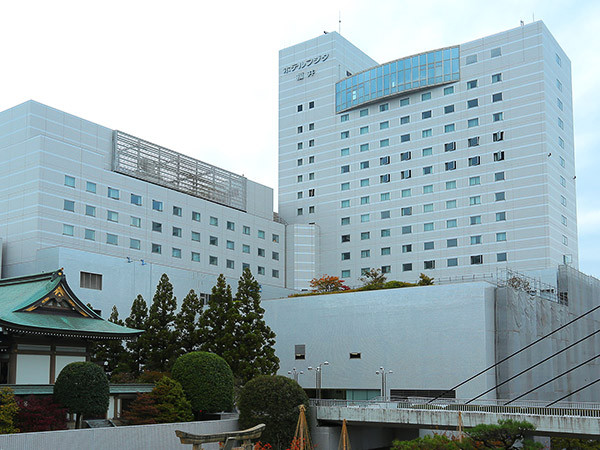
Hotel Fujita Fukui
7-min walk from JR Fukui station